Creative retelling · Job 1-2, 38-42
When Everything Collapsed
A man with a stable life loses nearly everything at once and must decide whether mystery can still be inhabited without easy answers.
Job had built the kind of life people use as evidence that wisdom works. His finances were healthy, his family lively, his reputation steady, and his routines solid enough to make blessing look almost procedural. Then collapse came with obscene speed. Business failures. Violent bad news. Health unraveling. Relationships strained by sorrow too heavy to hold neatly. Within a short span he went from being an example others admired to being a cautionary room nobody wanted to enter. The most painful part was not only the losses themselves. It was watching people scramble to protect their worldview by explaining his suffering back to him as if it must be his fault.
Job refused both convenient options available to him. He would not pretend the pain was smaller than it was, and he would not curse meaning out of existence simply because meaning had become inaccessible. He sat in ash, argued with silence, answered his friends with increasingly sharp honesty, and kept addressing the God who seemed absent precisely because he still believed relationship mattered. That insistence was its own form of faith. Not tidy confidence, but stubborn conversation. He wanted reasons. What he received, eventually, was something stranger: an encounter with vastness. A reminder that the world was more layered, alive, and unmanageable than his demand for explanation allowed.
The story does not cheapen suffering by tying every thread into a moral bow. Restoration comes, but it does not erase the reality of what was lost. Job's deeper change lies in the movement from secondhand certainty to humbled wonder. He comes to see that control was never the basis of his life, even in the prosperous years. For modern people who treat optimization as a shield against tragedy, Job remains necessary. Sometimes everything collapses anyway. The question then is not whether you can produce a satisfying theory. It is whether you can remain open to mystery without surrendering honesty, and whether reverence can survive in a world you cannot make safe.
Keep the story
Share or save this reading
View the art direction prompt
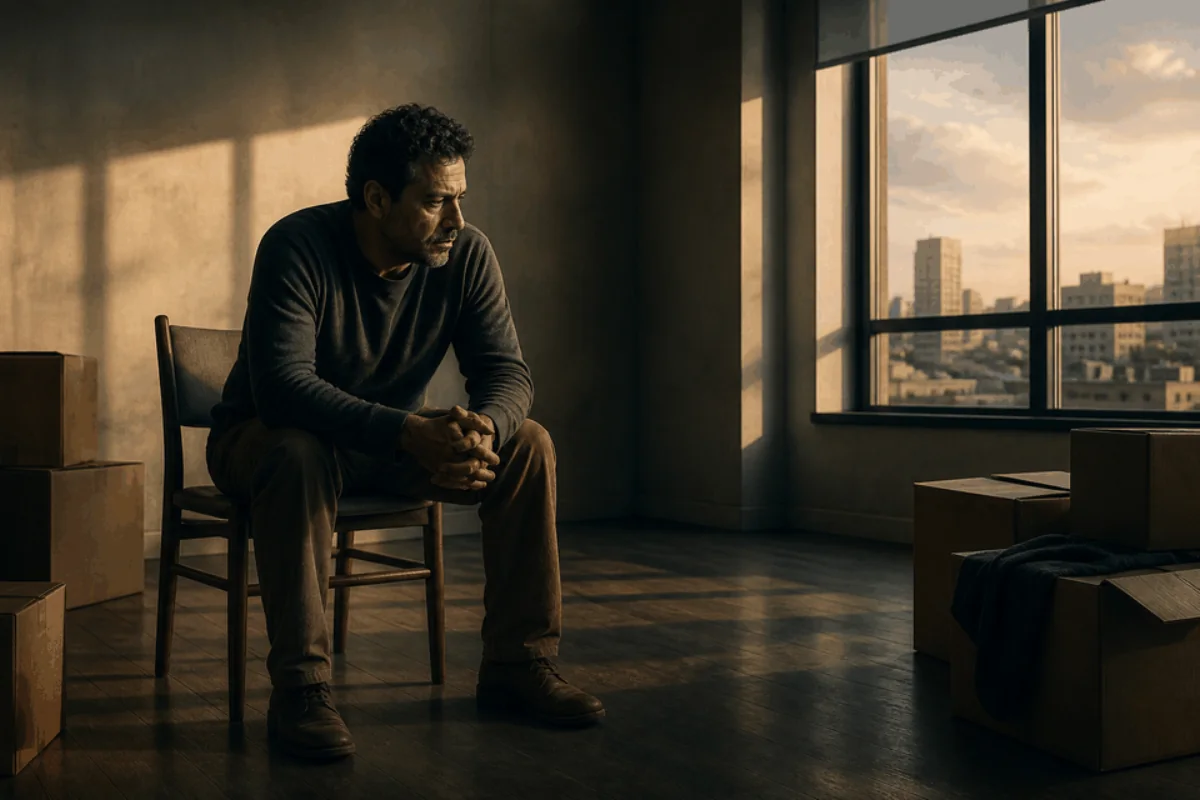
Contemporary portrait of a once-successful man sitting in a stripped apartment after financial and personal loss, muted earth palette, dignified sorrow, cinematic realism