A narrative is only useful when it changes the operating rhythm
Teams often treat positioning as a language problem: find a sharper headline, refine the deck, and align on a few approved phrases.
Language matters, but the real test begins after the workshop.
That test is especially important in crypto, where token incentives, community participation, and decentralized distribution make go-to-market structurally different from a conventional sales funnel, as a16z describes in its guide to go-to-market in Web3.
A strong narrative should make decisions easier. It should clarify which users matter most, which proof deserves attention, what the product should emphasize, and which campaigns are distractions. If the weekly operating rhythm stays exactly the same, the positioning probably has not become real.
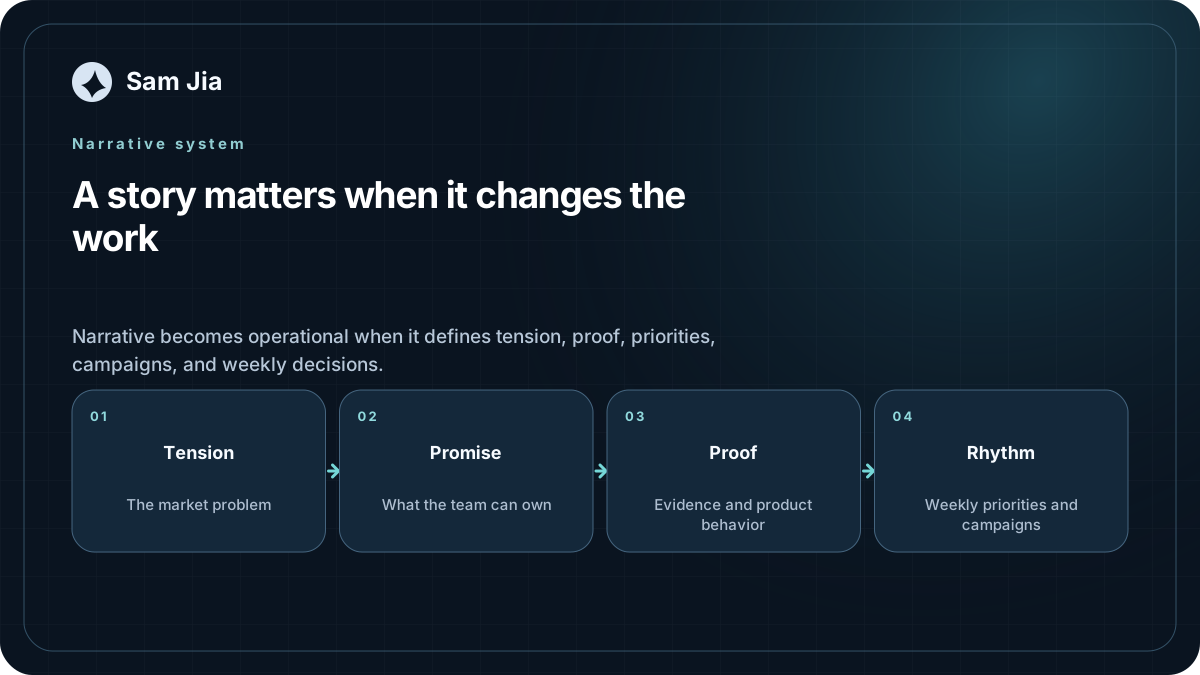
Start with the tension
Useful positioning names a tension the customer already feels. It does not begin with a list of product capabilities.
For a crypto team, the tension might be trust versus speed, sovereignty versus convenience, or deep liquidity versus transparent execution. The sharper the tension, the easier it becomes to decide which product details and market signals support the story.
Turn the story into proof
Every important claim needs a proof path. That proof might be product behavior, customer evidence, market structure, operating history, or a repeatable demonstration.
This is where narrative and operations meet. The team needs to know:
- Which claims are already defensible?
- Which claims need stronger evidence?
- Who owns producing that evidence?
- Where will the proof appear in the user journey?
Without this layer, messaging becomes aspiration. With it, messaging becomes an execution plan.
For token projects, proof also has an irreversible deadline: a16z’s token launch readiness guide argues for product-market fit and operational readiness before a token launch, rather than expecting the token itself to create lasting demand.
Reflect it in the weekly cadence
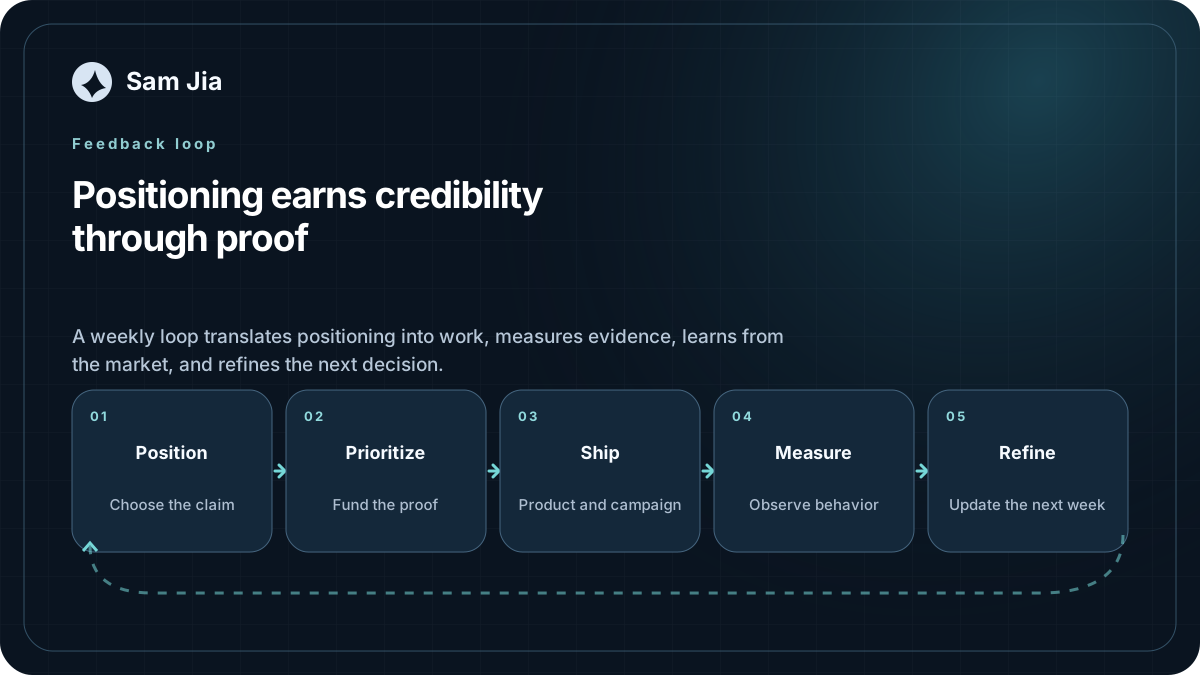
Once the narrative is clear, it should show up in recurring decisions:
- Campaign reviews should measure whether the intended audience understood the core promise.
- Product reviews should identify which improvements strengthen the proof.
- Content planning should cover customer questions, not fill a publishing calendar.
- Community feedback should be grouped around the tensions the positioning is meant to resolve.
The narrative is working when different functions begin making compatible decisions without needing constant coordination.
Measure that alignment carefully. Wallet activity is useful, but a16z’s estimate of real crypto users explains why active addresses should not be treated as a one-to-one proxy for people.
Keep it specific enough to exclude
The uncomfortable part of positioning is exclusion. A story that accommodates every audience, use case, and market condition gives the team very little direction.
Specificity creates leverage. It gives campaigns a point of view, makes product tradeoffs more legible, and helps the right users recognize themselves faster.
The same principle applies to participation design. Variant’s framework for designing governance tokens argues that governance should follow the project’s context and contribution patterns rather than a universal template.
The goal is not to create a permanent sentence. Markets change and products evolve. The goal is to build a narrative that is clear enough to guide the next set of decisions—and an operating rhythm that reveals when the story needs to change.
Related reading
Continue the operating conversation
Get occasional notes on crypto operations, AI workflows, and growth systems. No spam. Unsubscribe anytime. Usually fewer than two emails per month.